
In a world of algorithms and split-second decisions, the most durable competitive advantage still comes from people working together.
There is a persistent myth in trading culture: the lone genius, staring at screens in a darkened room, making calls that no-one else could see. It makes for good cinema. In practice, it makes for poor risk-adjusted returns. OK, so fine I can think of one person that this applied to. But, actually, even his breakout time in trading came from collaborating with another trader at my firm. They both saw something strange in the market, discussed it, made a plan to execute it and actually traded the entries together. It was only later that one of these traders became a notorious “lone hound”!
Modern markets are too complex, too fast, and too interconnected for any single trader to hold a complete picture. The firms and desks that consistently outperform are not built around individual brilliance — they are built around structured, intentional collaboration.
Every trader on a desk sees a slightly different piece of the market. The rates trader watching the yield curve, the equity trader tracking sector rotation, the macro analyst piecing together central bank signals — individually, each view is partial. Together, they form something closer to a complete thesis.
Structured morning meetings, pre-market briefings, and end-of-day reviews exist for exactly this reason: to pool fragmented information before it becomes fragmented decision-making. When teams skip these touchpoints, they don't just lose alignment — they lose the compounding advantage of shared intelligence. I am not suggesting that every trader trades the same idea, or even gives away their strategy to anyone else. But listening to others' perspectives can be very grounding. It can open your eyes to secondary hypotheses in the market not leaving you in a state of misaligned bias.
Collaboration is a risk management tool
Overconfidence, anchoring, and confirmation bias are not character flaws — they are predictable features of human cognition under pressure. Collaboration is one of the few reliable mechanisms for catching these biases before they become costly positions.
When traders are required to articulate their thesis to a colleague, to defend their sizing, or to explain their stop logic out loud, something important happens: weak assumptions surface. The desk becomes a distributed quality-control function, not just a group of individuals running parallel books.
Presence matters more than people think
Attendance at team sessions is not merely a courtesy. It is an operational input. The trader who misses the morning meeting does not just miss an update — they miss the calibration that shapes every decision they make for the rest of the day.
How Raen is built around this principle
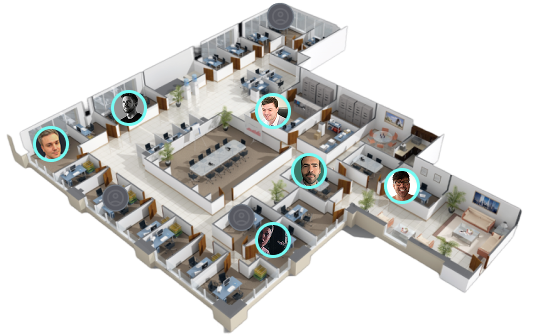
At Raen, we took the question of collaboration seriously from the ground up — including what it means in a virtual environment. Operating as a virtual office removes geographical barriers, but it introduces a different challenge: keeping people genuinely connected when there is no shared physical space to fall back on. Getting people to log on alone is a battle. Not to mention the challenge of myself getting somewhat overwhelmed with workload! And not for a second will I say it has been a perfect road to the destination that I intended.
The answer is structure, intentionality and determined grit. Regular sessions bring the whole team together on a consistent cadence, ensuring that market views are shared, positions are discussed, and no-one is operating in isolation. These are not optional check-ins — they are a core part of how we trade.
How we work at Raen
- Regular team sessions keep everyone aligned across the virtual office, from market open to close. We hold regular weekly meetings and have brought in extra hands to ensure adherence to schedules.
- We hold daily meetings for all our live traders before the US open as well as prep before major market moving events. Some of these are recorded for Phase 2 participants.
- Risk management accountability sits at the firm level, with direct oversight to ensure no position or exposure goes unexamined.
- An open door policy means any trader can raise a concern, question a thesis, or flag a risk at any point — no hierarchy, no friction.
Risk management accountability is held firmly at the firm level. That means it is my explicit responsibility to look across all positions, challenge assumptions, and ensure that individual conviction does not outrun collective oversight. In trading, unchecked risk is not a personal problem — it is a firm problem. Raen treats it accordingly.
Perhaps most importantly, we operate with a genuine open door policy. Any member of the team can raise a concern, question a trade, or flag something that doesn't feel right — at any time, without friction. In a virtual environment, this kind of psychological safety does not happen automatically. It has to be modelled from the top and reinforced consistently.
Building a culture that actually collaborates
Collaboration in trading does not happen by default. It has to be built deliberately — through meetings worth attending, a culture where questioning a thesis is seen as rigour rather than challenge, and leadership that models openness rather than projecting infallibility. Not easy but we try!
The desks that get this right are more resilient in drawdowns, faster to adapt to regime changes, and better at developing talent across the board. The returns to genuine collaboration compound, just like everything else in this business.
The lone genius is a story. The high-performing desk is a system. And systems, by definition, require everyone to show up.
Dan’s Weekly Wisdom:
“Iron sharpens iron — one trader sharpens another.”